How to Choose an Industrial Centrifuge
A Practical Guide for Process Engineers and Buyers
01 Why Centrifuge Selection Should Start with the Process
Choosing an industrial centrifuge is an important engineering decision. The wrong separation method can create problems with product recovery, moisture content, operating stability and maintenance costs.
For chemical, pharmaceutical and polymer manufacturers, the best starting point is not the machine model or rated capacity. It is the material to be processed and the result the production line needs to achieve.
Before comparing suppliers, define the separation objective and collect basic process data.
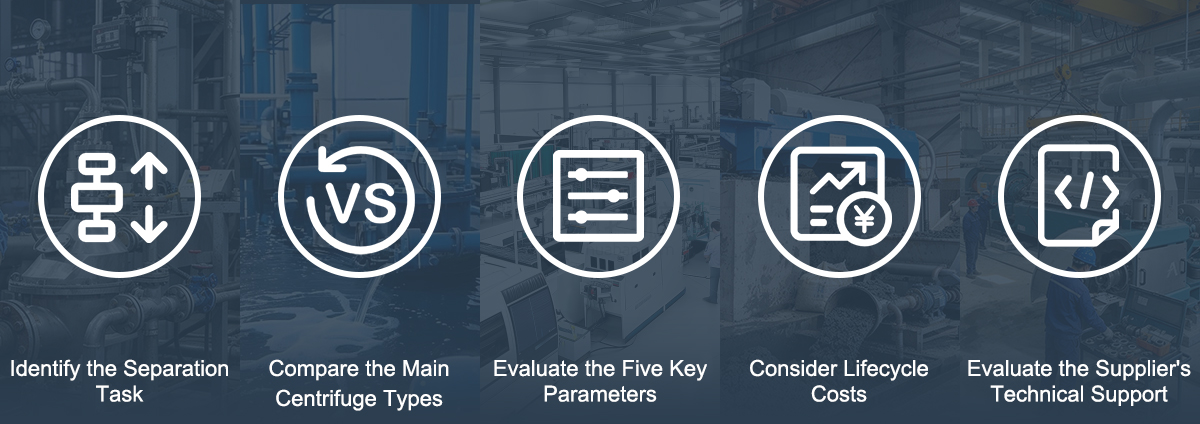
Step 1: Identify the Separation Task
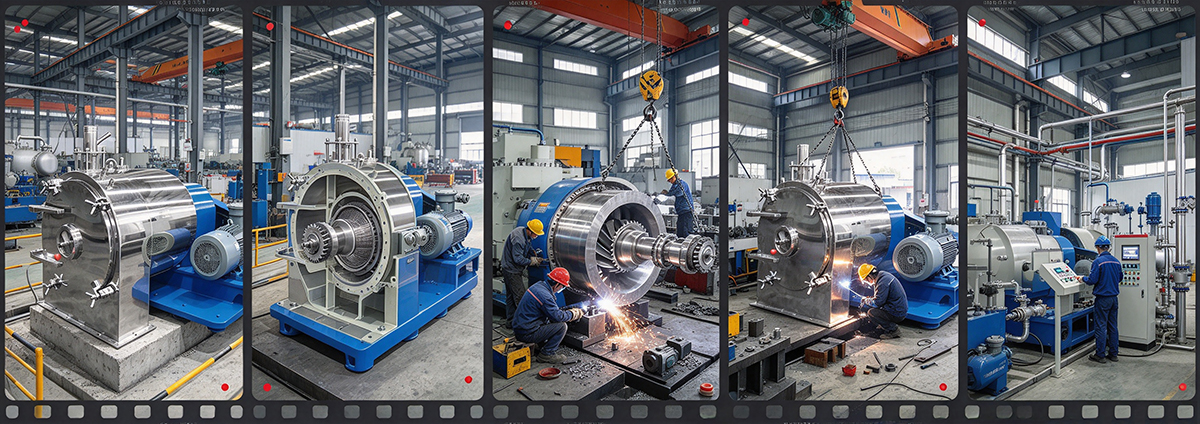
Industrial centrifuges are designed for different separation mechanisms and applications.
• Sedimentation: Used when differences in density and particle behavior allow solids to settle under centrifugal force.
• Filtration: Uses a suitable filtering medium to separate solids from liquid.
• Extraction or liquid-liquid separation: Requires a configuration matched to the phases, material properties and process conditions.
Understanding the separation mechanism helps narrow the range of suitable machines.
Step 2: Compare the Main Centrifuge Types
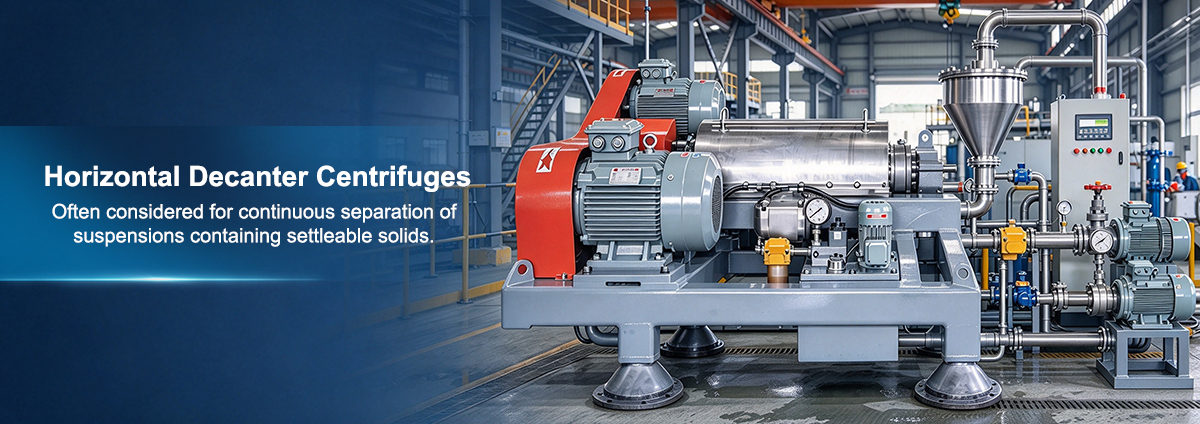
Horizontal decanter centrifuge
A horizontal decanter centrifuge is commonly considered for continuous processing of suspensions containing settleable solids. Its suitability depends on feed characteristics, separation targets and operating conditions.
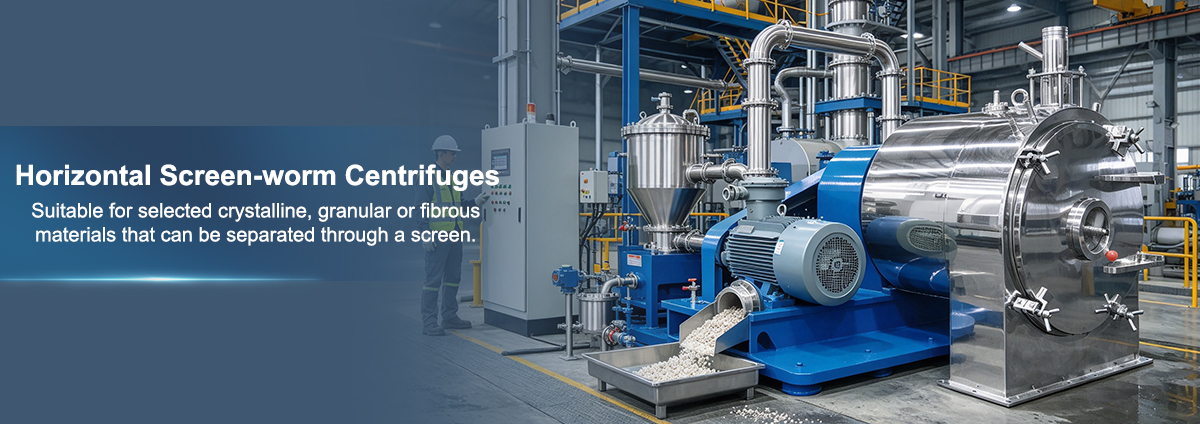
Horizontal screen-worm centrifuge
This type is often considered for suitable crystalline or granular materials where screen filtration and solids transport are appropriate to the process.
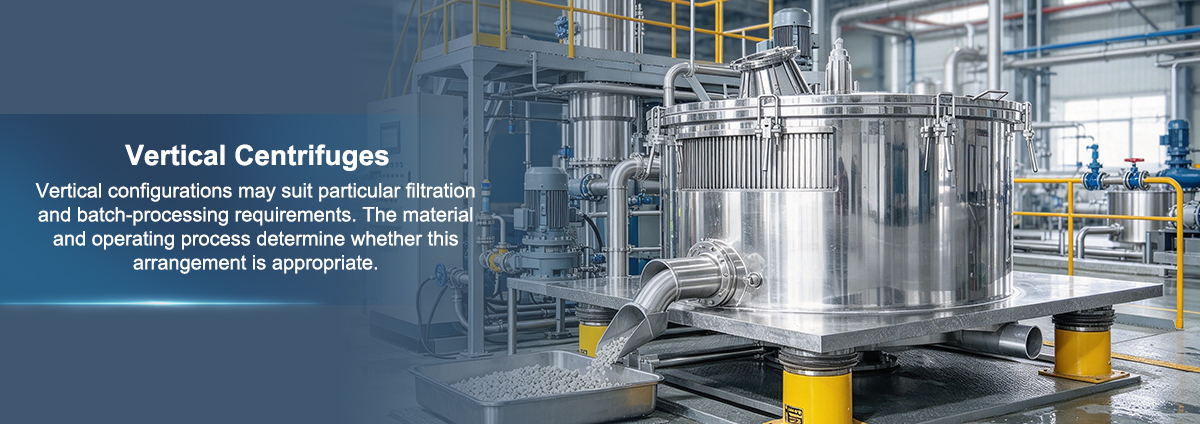
Vertical centrifuge
Vertical configurations may suit particular filtration and batch-processing requirements. The material and operating process determine whether this arrangement is appropriate.
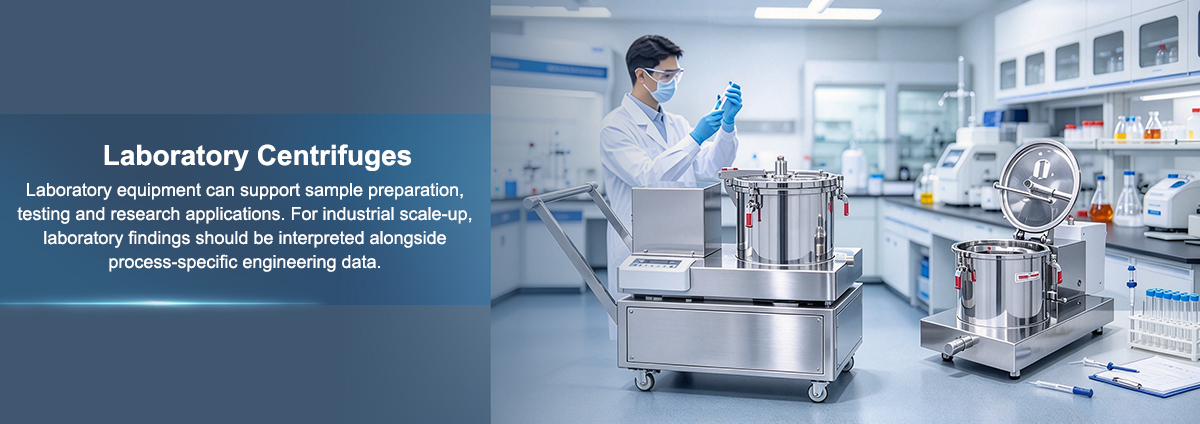
Laboratory centrifuge
Laboratory equipment can support sample preparation, testing and research applications. For industrial scale-up, laboratory findings should be interpreted alongside process-specific engineering data.
No single design is best for every material. A meaningful comparison should consider the separation mechanism first and the machine configuration second.
Step 3: Evaluate the Five Key Parameters
Before requesting a quotation, prepare the following information:
1.Material composition: Identify the solids, liquid phase and relevant chemical properties.
2.Feed concentration: Provide the approximate solids content and, if available, particle-size distribution.
3.Processing capacity: State the required throughput per hour or batch.
4.Separation target: Define the desired solids recovery, liquid clarity or moisture content.5.Operating conditions: Include temperature, corrosion considerations, cleaning requirements and operating schedule.
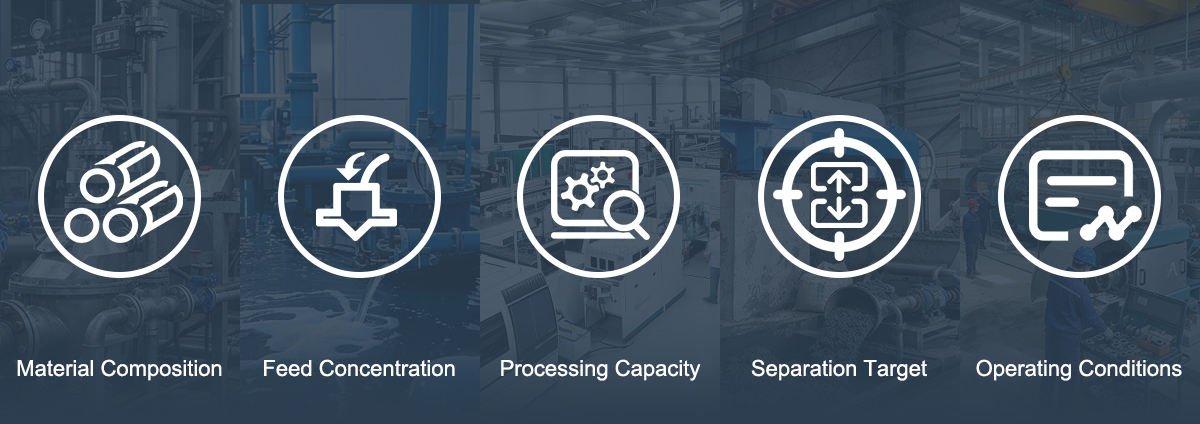
The more accurate the process information, the easier it is for a supplier to evaluate a suitable configuration.
Step 4: Consider Lifecycle Costs, Not Just Purchase Price
A centrifuge is part of a production system, so its value should be assessed over the operating lifecycle.
Consider energy consumption, wear parts, maintenance access, cleaning procedures, spare-parts availability and the cost of unplanned downtime.
It is also worth asking whether the supplier can explain its selection rationale, provide relevant technical documentation and support material testing before the equipment specification is finalized.
Step 5: Evaluate the Supplier’s Technical Support
A reliable equipment selection process involves more than receiving a catalogue and quotation.
Discuss the feed material, production objectives and process constraints with the engineering team. Where appropriate, request material testing or a technical evaluation before committing to a machine configuration.
Blovebird offers industrial centrifuge products, technical consultation and testing services to help customers assess their separation requirements.
02 Start Your Centrifuge Selection with Blovebird
Whether you process chemical salts, polymers or other industrial materials, the right equipment starts with the right process information.
Visit https://lnlxj.com/ to explore our horizontal, vertical, extraction and laboratory centrifuges. Contact Blovebird to discuss your material, throughput and separation targets.
Request a Quote →
03 Core Technical Advantages of Blovebird.
📞 Get in Touch: www.lnlxj.com
✅ Complimentary material analysis.
✅ Free on-site sludge testing.
✅ Tailored model selection & solutions.
✅ Quotation delivered within 24 hours.


30 Year Brand
A Number of National Patents

Contact Us
Know More