Industrial Wastewater Treatment
01 Why Solid-Liquid Separation Matters in Industrial Wastewater Treatment
Industrial manufacturers are under growing pressure to manage wastewater responsibly, improve resource utilization and control operating costs. For chemical plants, pharmaceutical facilities and process industries, efficient solid-liquid separation is an important part of a practical wastewater treatment strategy.
A properly selected industrial centrifuge can help separate suspended solids from liquid streams, reduce the volume of wet solids and support downstream treatment processes.
However, wastewater streams vary significantly. Particle size, solids concentration, viscosity, temperature and chemical compatibility can all influence separation performance. Selecting equipment based only on processing capacity may lead to disappointing results.
02 How Does an Industrial Centrifuge Work?
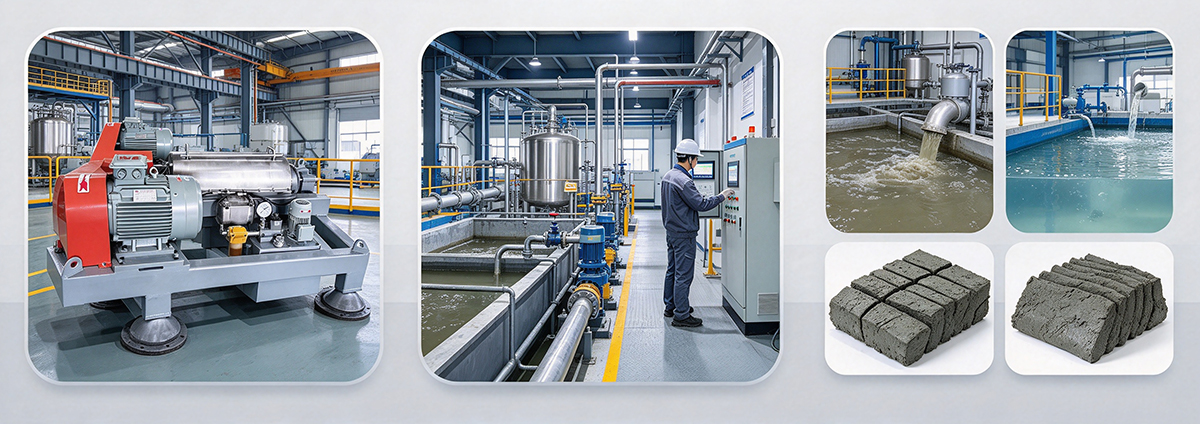
Industrial centrifuges use centrifugal force to separate components according to differences in density and their behavior under operating conditions.
Depending on the characteristics of the material, different centrifuge designs may be appropriate:
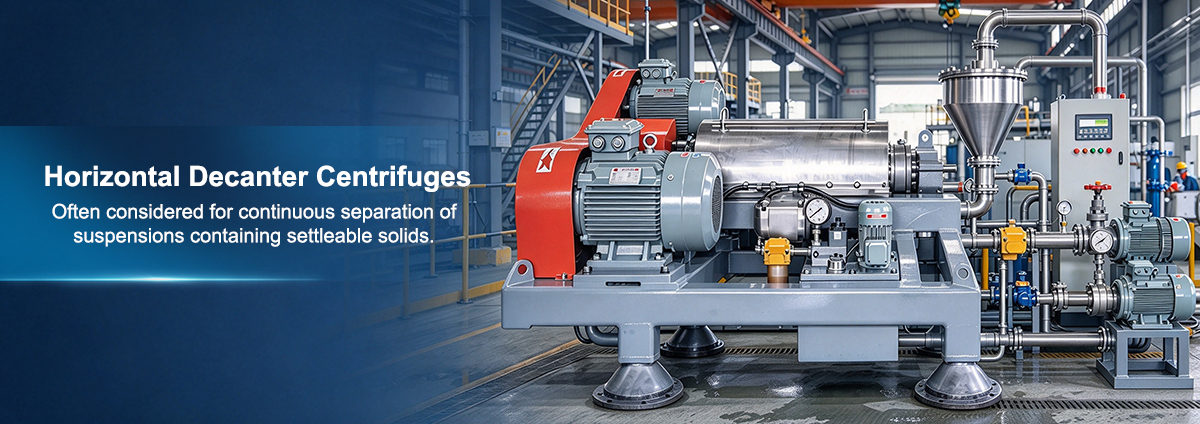
• Horizontal decanter centrifuges: Often considered for continuous separation of suspensions containing settleable solids.
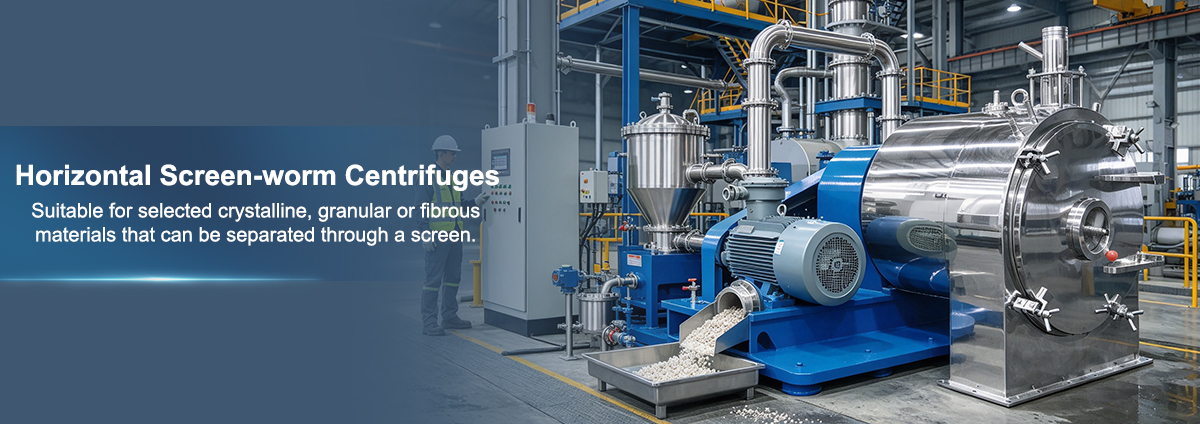
• Horizontal screen-worm centrifuges: Suitable for selected crystalline, granular or fibrous materials that can be separated through a screen.
• Other industrial centrifuge configurations: May be considered when filtration characteristics, product requirements or process conditions call for a different separation method.
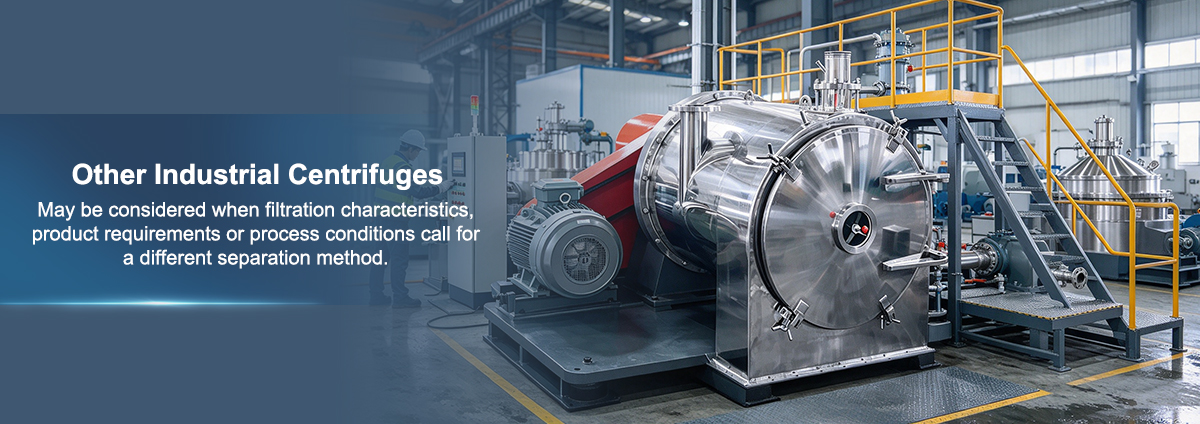
The right solution depends on the actual feed material and the required output, not simply on the machine category.
03 Three Factors to Consider Before Selecting a Centrifuge
1. Feed Characteristics
Determine the solid content, particle-size distribution, density, viscosity and chemical composition of the material. These parameters help narrow down suitable separation technologies.
2. Separation Objectives
Clarify whether the priority is liquid clarification, solids dewatering, solids recovery or preparation for a subsequent treatment stage. Different objectives may require different machine configurations.
3. Total Operating Requirements
Evaluate throughput, energy consumption, maintenance access, wear-part requirements and integration with the existing production line. A machine should be assessed as part of the complete process.
04 Blovebird: Centrifuge Solutions for Industrial Applications
Jiangsu Blovebird Centrifuge Co., Ltd. develops and manufactures industrial centrifuges for a range of process applications. Its product portfolio includes horizontal centrifuges, vertical centrifuges, extraction centrifuges and laboratory centrifuges.
For wastewater and industrial separation projects, equipment selection should begin with an understanding of the material and process conditions.
Blovebird provides technical consultation and material testing services to help customers evaluate suitable equipment options.
05 Discuss Your Separation Requirements.
Planning a wastewater treatment upgrade or looking for an industrial solid-liquid separation solution?
Share your feed material, approximate processing capacity, solids concentration and target separation result with the Blovebird team.
Visit https://lnlxj.com/ to explore our centrifuge products and contact us about your application.
Request a Quote →
06 Core Technical Advantages of Blovebird.
📞 Get in Touch: www.lnlxj.com
✅ Complimentary material analysis.
✅ Free on-site sludge testing.
✅ Tailored model selection & solutions.
✅ Quotation delivered within 24 hours.


30 Year Brand
A Number of National Patents

Contact Us
Know More